

Technical Advantages
以气体感知为核心的极早期预警技术路线,让微弱或间歇性中高压系统PD或过热缺陷无所遁形
Principles of AI-Powered Electrical Olfactory Sensing Technology
MV/HV系统早期缺陷会释放特征气体,霍威克AI 嗅觉监测技术在故障演变为严重之前即可捕捉这些微弱化学信号
CO
Characteristic Gas
CO₂
Characteristic Gas
H₂
Characteristic Gas
O₃
Characteristic Gas
NOx
Characteristic Gas
SO₂
Characteristic Gas
Alkanes
Characteristic Gas
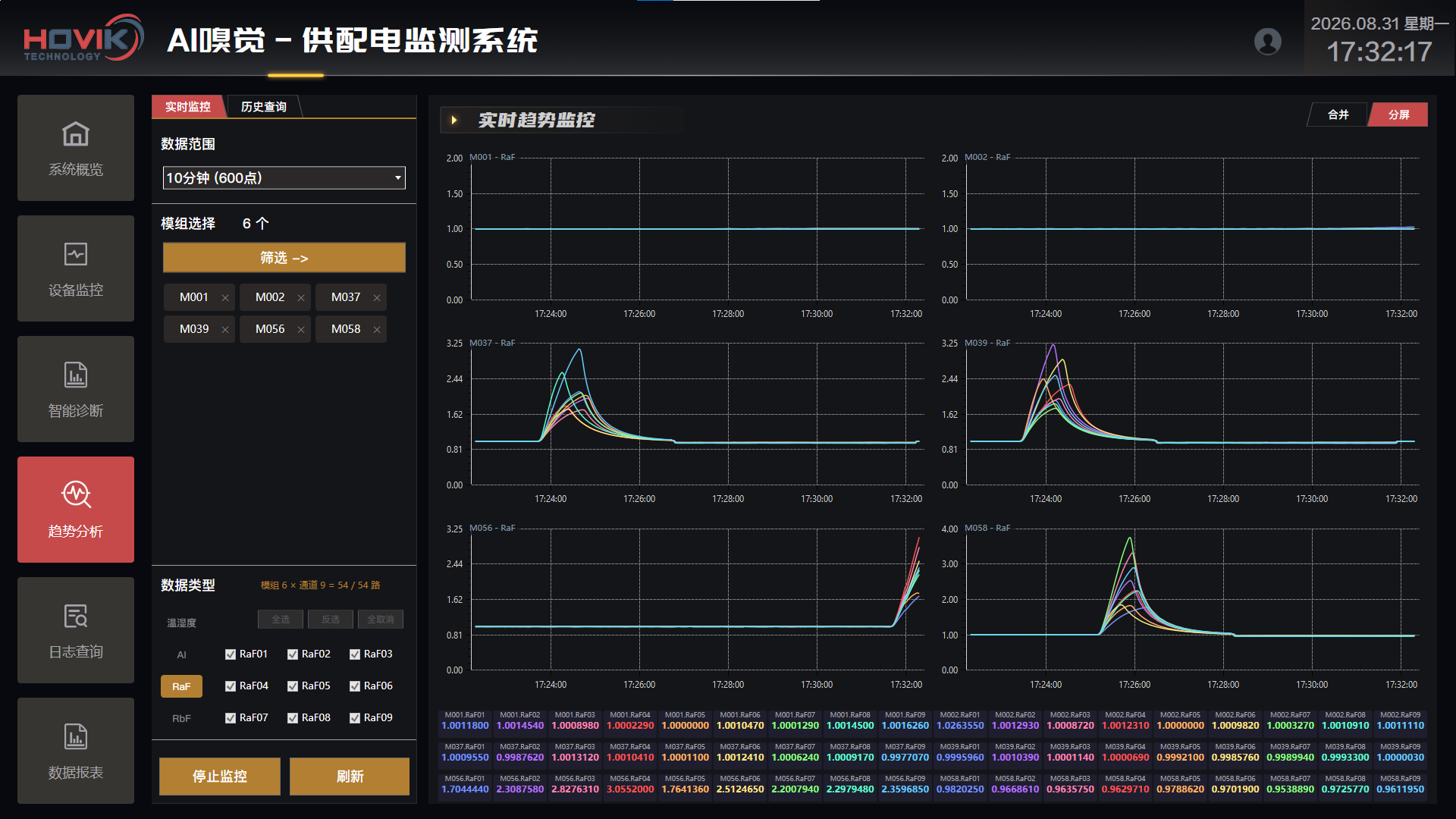
Different fault types and stages exhibit unique gas composition and concentration patterns. HOVIK leverages multi-gas composite detection and AI-driven modeling to translate gas signals into fault classification, location identification, and trend prediction—shifting maintenance from reactive repair to proactive warning.
3-in-1 Detection
One system covers three major hazards in power supply and distribution equipment.
Insulation Overheating
Insulating materials decompose under heat to produce CO, CO₂, and alkanes; odor detection occurs before significant temperature rise.
Partial Discharge
Partial discharge generates characteristic gases such as O₃ and NOx, providing gas-dimension evidence for discharge hazards.
Environmental contamination
Monitor pollution and corrosive gas in the distribution space to assess equipment environmental risks.
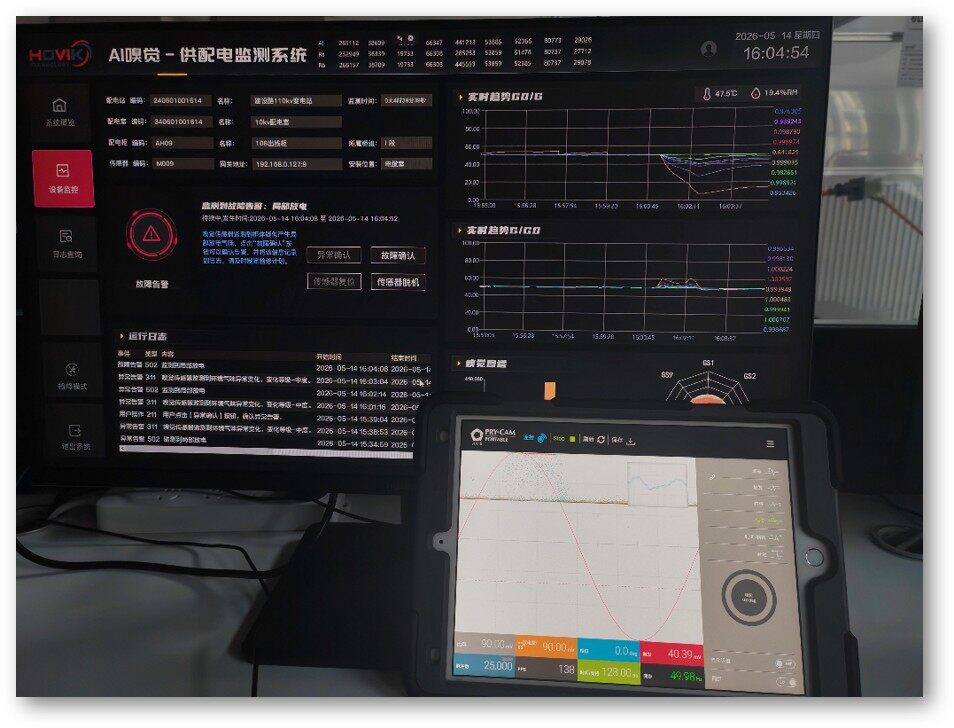
Cross-validation for more reliable conclusions
Cross-validated with industry-standard methods including HOVIK, Prysmian's PRY-CAM (partial discharge detection), and Fluke infrared thermography (thermal imaging). Olfactory gas signals are correlated with partial discharge and thermal measurements; multi-physics data collectively supports alarm conclusions, reducing false positives and missed detections.
- Gas Dimensions: Characteristic Gas Concentrations and Combination Patterns
- Electrical Dimension: Prysmian Pry-cam Partial Discharge Detection
- Temperature Dimension: Fluke Infrared Thermal Imager Temperature Field Imaging
Evidence
Dramatic Advancement of the Early-Warning Window
Laboratory simulation: Controlled step-voltage test (6 kV → 20 kV) replaying insulation degradation in accelerated time, not live field data.
The earlier and weaker the defect, the greater olfaction's lead; this lead varies by condition, and this test is just one example.
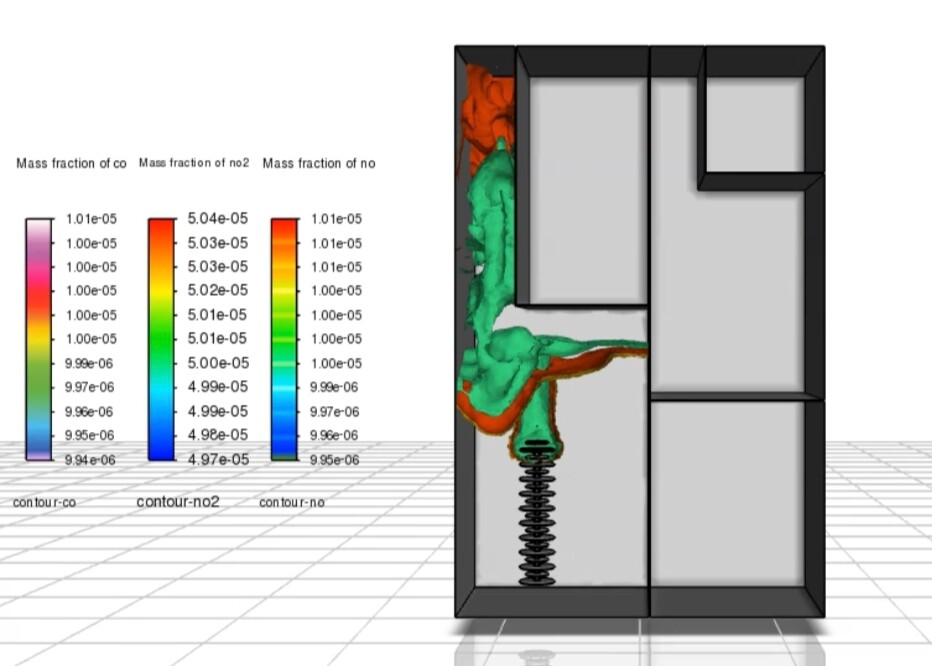
CFD simulation with data-driven point placement
For diverse spaces such as switchgear rooms, cable trenches, and tunnels, HOVIK uses CFD (Computational Fluid Dynamics) simulations to model fault gas dispersion paths and accumulation zones. This enables scientifically optimized sensor placement and quantity, ensuring every monitoring point delivers maximum detection performance.
- Spatial Airflow Organization and Gas Diffusion Path Simulation
- Output of Optimal Sensor Placement Plan
- Identify Blind Spots and Iterate Solutions
AI-Powered Diagnostic Platform
Turn gas data into actionable operations decisions
Trend Analysis
Model long-term trends in gas concentration to identify hidden hazards that develop slowly.
Intelligent Alerting
AI classifies fault types and severity levels, then pushes alerts via multiple channels.
Diagnostic Report
Automatically generate equipment health diagnostic reports to support maintenance decisions.
One Sensor, Consistent Data Across Portable and Online Systems
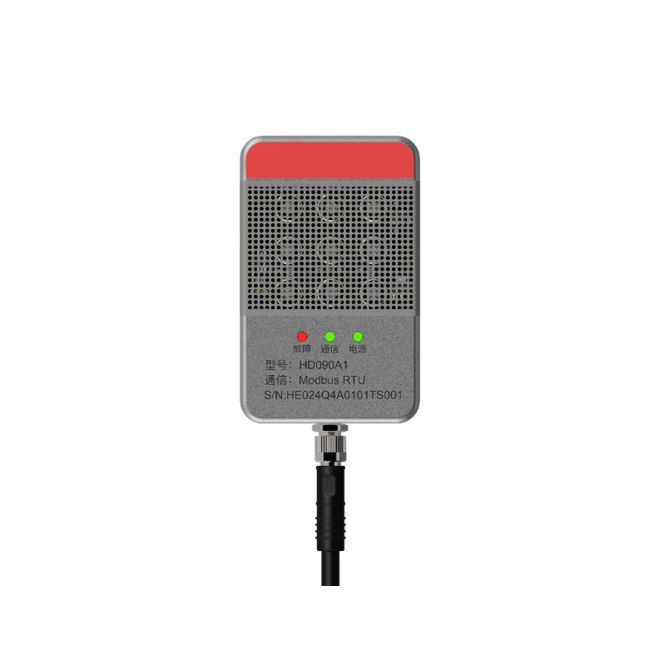
The portable device and online monitoring system share the same HD090A power olfaction sensor—a metal-oxide-semiconductor (MOS) sensor with 9 gas detection channels—ensuring consistent data and seamless continuity between mobile inspections and permanent monitoring.
- HD09A metal-oxide-semiconductor sensor with 9 gas characteristic channels
- Portable inspection results match online monitoring baselines.
- Seamless transition from short-term screening to long-term online monitoring
Schedule Technical Consultation
与 HOVIK 工程师深入探讨 AI 嗅觉技术在您场景中的应用价值